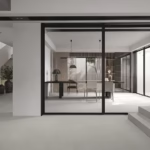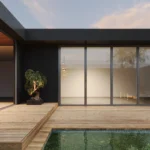
In Malaysia, where there is a diverse range of architectural styles and housing needs, standardized doors and windows often struggle to fully meet individual requirements. Customized door and window services are becoming an increasingly popular choice for homeowners. These services not only perfectly match special sizes and unique designs but also reflect the personal taste and lifestyle needs of the homeowner.
Why choose custom-made doors and windows? Five considerations for Malaysian homeowners: 1. Non-standard sizes perfectly address the unique opening dimensions of old buildings: traditional Malay houses and pre-war shophouses
Irregular design: special shapes such as curved windows, trapezoidal windows, circular windows, etc
Expansion part: The newly added room does not match the opening of the original building
2. Unified style and protection of individual expression: preserving traditional style by restoring historical buildings and maintaining their original appearance
Integration of modern design: innovative combination of contemporary design and traditional elements
Personalized expression: unique choices in color, texture, and segmentation proportion
3. Functionally targeted optimization for specific ventilation needs: Optimal airflow design for tropical climates
Balancing privacy and natural lighting: Adjusting transparency and opening methods according to different room functions
Special safety requirements: Design of safety levels tailored to different floors and surrounding environments
4. Maximizing space utilization and optimizing small spaces: Space-saving design for compact residences
Maximizing View: Frameless or Minimal Frame Design Enhances Landscape View
Indoor-outdoor integration: Large folding doors and sliding doors create a seamless transition space
5. Flexible combination of materials and processes, utilizing mixed materials: combination of aluminum and wood, glass and metal
Local material application: locally sourced wood and craftsmanship suitable for the climate
Technological innovation integration: combining traditional craftsmanship with modern technology
Customization Process Explanation: Complete Steps from Concept to Installation. Stage 1: Requirement Analysis and Professional Consultation (1-2 Weeks). On-site Measurement: Professional Technicians Conduct Three Measurements to Ensure Accuracy
Requirements interview: Understanding lifestyle, usage habits, and aesthetic preferences
Climate analysis: Determine performance requirements based on orientation and surrounding environment
Budget planning: Clarify the scope of investment and priority allocation
Phase 2: Design and Scheme Development (2-3 weeks) Conceptual Design: Provide 2-3 preliminary design schemes
3D visualization: Simulate the final effect using software
Technical drawings: detailed fabrication drawings, node drawings, installation drawings
Material sample: Provide physical material samples for selection
Phase 3: Production and Quality Control (4-8 Weeks) Production Monitoring: Reporting progress through photos or videos of key milestones
Factory testing: Conduct water tightness, air tightness, and wind pressure resistance tests before completion
Surface treatment: Special coating chosen based on the Malaysian climate
Pre-assembly inspection: Ensure all components perfectly match
Phase 4: Professional installation and debugging (1-2 weeks) Site protection: Comprehensive protective measures for the construction area
Precision installation: Professional tools such as laser level meters ensure accuracy
Performance testing: Conduct on-site performance verification after installation
Training for use: detailed operational guidance and maintenance instructions