Introduction
In modern construction, windows and doors are no longer simple building components.
They are performance systems that influence thermal control, acoustic comfort, building safety, and long-term operating costs.
This article focuses on window and door optimization, explaining how the right system design improves building performance across different environments and project types.
Window and Door Optimization Starts with Building Performance
Optimizing windows and doors begins with understanding the building’s functional needs:
Climate conditions
Building orientation
Usage type (residential, commercial, industrial)
Energy efficiency targets
A well-optimized window and door system supports both comfort and operational efficiency.
Thermal Performance Optimization
Thermal performance is a key factor in window and door selection.
Key Optimization Elements:
Thermal break aluminum profiles
Multi-layer insulated glass units
High-quality sealing systems
These features reduce heat transfer and help maintain stable indoor temperatures, especially in warm or mixed climates.
Acoustic Optimization for Urban Buildings
In high-density urban areas, noise control is critical.
Optimized window systems improve sound insulation through:
Laminated or double glazing
Multi-point locking systems
Precision-installed frames
This enhances indoor comfort in residential apartments and hotels.
Structural Optimization for Large Openings
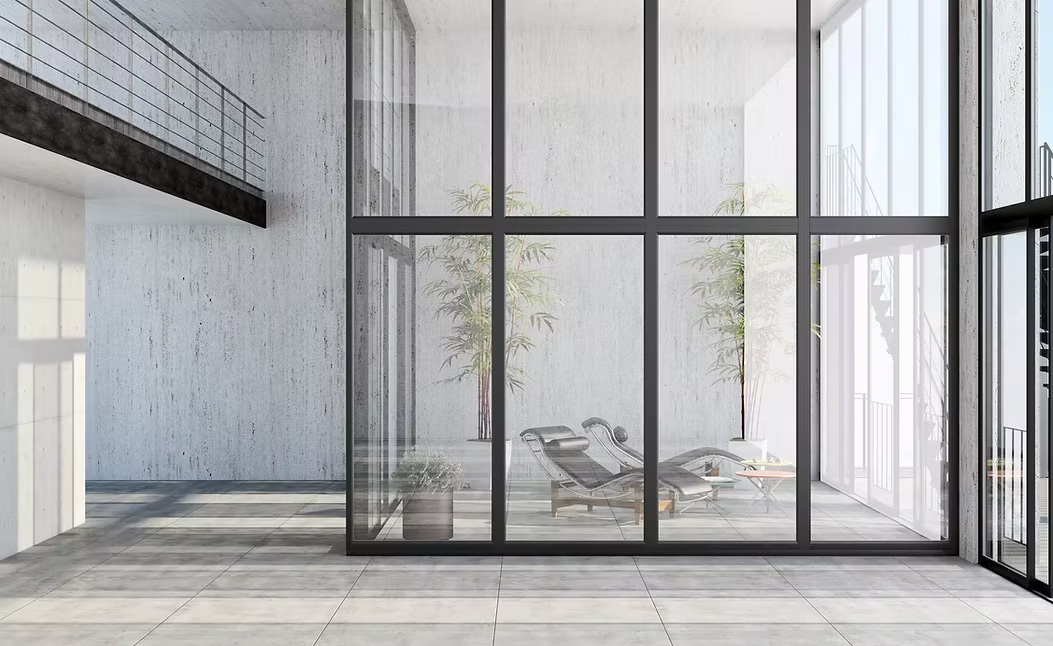
Modern architecture increasingly favors large glass areas.
Structural optimization includes:
Reinforced aluminum profiles
Load-tested window and door systems
High-performance hardware
This ensures safety and durability for high-rise and large-opening applications.
Application-Based Optimization Strategies
Residential Optimization
Balanced ventilation and insulation
Secure locking systems
User-friendly operation
Commercial Optimization
High durability for frequent use
Energy-saving performance
Minimal maintenance requirements
Project-Based Customization
Large projects often require:
Customized profile designs
Project-specific glazing options
Engineering support
Optimization at the project level improves overall building performance.
Why Aluminum Systems Excel in Window and Door Optimization
Aluminum windows and doors are widely chosen for optimized building systems because they offer:
High structural strength
Flexible design possibilities
Long-term dimensional stability
Compatibility with advanced glazing systems
These advantages make aluminum ideal for performance-driven projects.
Long-Term Value Through Optimization
Optimized window and door systems deliver:
Lower energy consumption
Reduced maintenance costs
Longer service life
Higher building value
Focusing on long-term performance is more effective than choosing products based on initial cost alone.
Conclusion
Window and door optimization is a strategic process that impacts building comfort, efficiency, and durability.
By selecting high-performance systems and working with experienced suppliers, developers can achieve better long-term outcomes for their projects.
Looking for Optimized Window and Door Solutions?
We provide performance-oriented window and door systems for residential and commercial buildings.
👉 Contact us for technical consultation and customized solutions.